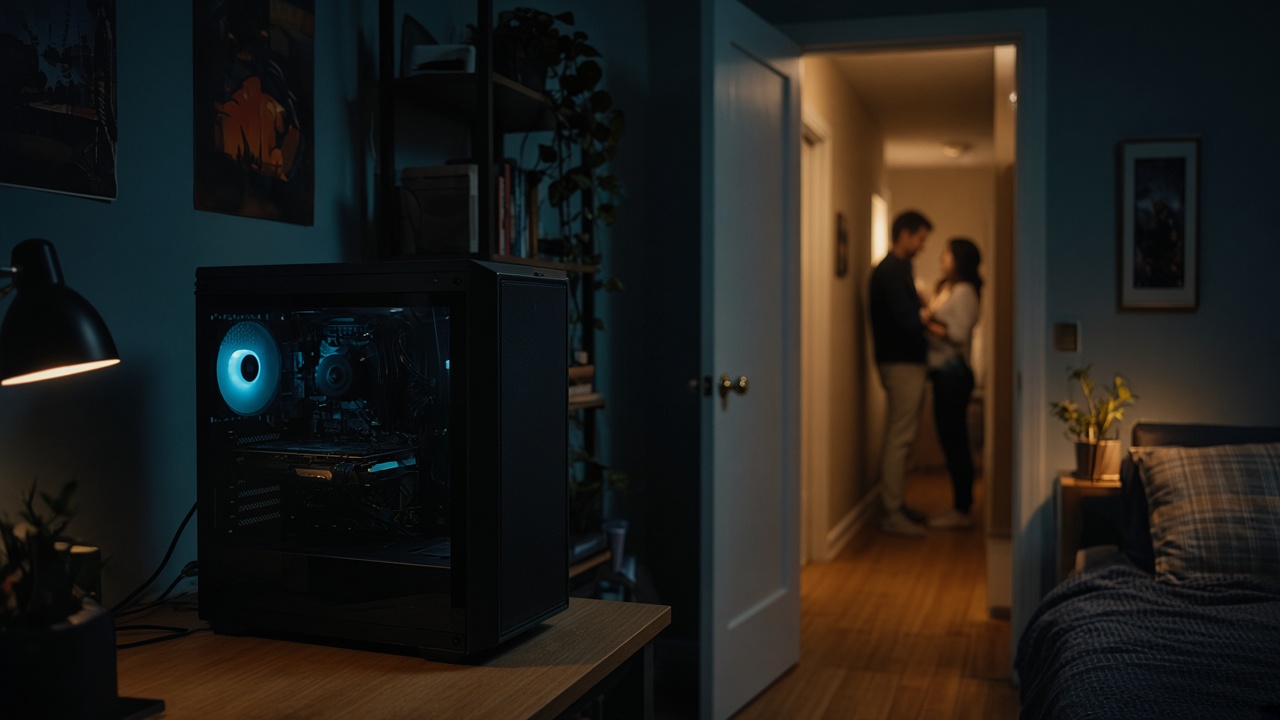
A gaming computer can look unused for long stretches of the day. The screen is dark, the chair is empty, and it is tempting to treat that quiet as spare value waiting to be collected. Quiet is not the same as available. The machine still sits in a room where people sleep, study, or talk. It still draws power when it is on. It may belong, in practice, to a child even when an adult paid for it. Those facts come before any idea of putting the computer to work.
MetaEdge has announced The NEST for 2026 as a bandwidth network, not as a promise that a graphics card will earn money. A later idea of contributing computing power is described as a concept for 2027 and may change. Nothing in that roadmap makes an idle PC productive today. Participation, if a service is offered, is for adults aged 18 and over. Children do not install nodes. Rewards would be variable and are not guaranteed. This is a household guide, not financial advice, and it invents no earnings.
Idle is not the same as available
Idle means the computer is not, at this moment, doing what it was bought to do. It does not mean the household has spare capacity with nowhere else to go. Someone may need the machine after school. A game update may be waiting. Another person may rely on the same desk for homework. A powerful PC can also be the family computer that happens to play games, not a separate appliance with no claimants. Before calling it idle, write down who uses it on a normal week and which hours are truly empty.
Availability is narrower still. A machine is available for a new task only if that task can stop when someone sits down, and only if an adult is allowed to install the software. A child’s gaming PC fails that test even when it sits unused all morning. The device is part of the child’s daily life. School laptops and shared family logins fail it for different reasons. An adult’s own computer, used by others only with permission, is the only kind of host this guide will even discuss.
There is also a mismatch of jobs. The announced first phase of The NEST is about unused bandwidth and approved enterprise demand, through a browser extension or a desktop node, when that software exists. It is not an instruction to keep a graphics processor busy. Families who picture a silent PC “working” overnight are often picturing a different product from the one on the 2026 roadmap. Hold the picture loosely. The decision in front of you is about a real machine in a real room, not about a future workload that has not been offered.
Electricity is a household cost
Any computer that stays on uses electricity. A gaming PC often uses more than a small laptop, especially when a demanding task wakes the graphics hardware and the fans. How much more depends on the components, the settings, and how hard the machine is working. This article will not quote a bill for your house. Prices, tariffs, and hardware differ too widely for an honest universal number. The practical step is local: look at your own plan, and notice whether the machine is already a visible part of the monthly cost.
A new always-on habit can change that cost without looking dramatic on a single evening. Leaving a desktop running through the night, every night, is a different pattern from switching it off after a game. Adults can compare a week with the usual routine and, later, a week with any new software, by reading the meter or the bill rather than trusting a screenshot of rewards. If the extra power is unclear, treat it as a reason to keep the trial small or not to start. Guessing in the hopeful direction is not a measurement.
Do not buy a more powerful computer, a new power supply, or a higher electricity budget in order to be ready. The NEST is planned for 2026, and rewards are not guaranteed. They would depend on eligibility, demand, location, what is actually used, and the terms. Spending now in the hope of a return turns a possible future option into a present cost. Essential bills, savings, and the needs of children stay outside that hope. A variable reward is not a plan for paying the power company.
Noise, heat, and the room
Gaming computers move heat out with fans. Under a light load they may be nearly quiet. Under a heavier load they can fill a small room with a steady rush of air. Bedrooms, nurseries, and rooms where someone revises or takes calls are poor places for that sound, even if the person who usually plays games is happy to wear headphones. The rest of the household does not wear those headphones. A decision about leaving the PC on is a decision about everyone who shares the wall.
Heat is the same fact in another form. A closed cupboard, a hot climate, or a machine already pushed against a wall can turn a long session into a warmer room and a louder fan. Adults do not need a thermal model to notice this. They can put a hand near the case during a normal game and ask whether that warmth, for more hours, belongs in that room. Dust, blocked vents, and pets are ordinary reasons a PC runs hotter. Clearing those is home maintenance. It is not preparation for a node.
If the only quiet option is to keep the computer off, that option is allowed. Household comfort is not a technical failure. Some families will decide that the gaming PC stays a game machine: on for play, off afterward, and never enrolled in anything. That choice protects sleep and concentration. It also avoids the slow pressure to leave a loud machine running because a screen suggests it is “almost” earning. Almost is not a household plan. Comfort comes first here.
Who the computer is for
Ask whose name would be on a sticky note on the case. If the honest answer is a child or a teenager, the computer is not a candidate for participation. Parents may have paid for it. They may set the hours of play. Those facts do not convert a child’s device into household infrastructure. Children do not install nodes, and participation is for adults aged 18 and over. Skill with graphics settings does not lower that age. The rule is easier to keep when it is said before anyone downloads a tool.
Shared use needs the same clarity. A PC in the living room may be an adult’s machine that children use for a game on weekends. The adult can still refuse to install sharing software, and should refuse if play, homework, or family calls would be pushed aside. A reward that depends on the machine staying free is a reason to be more careful, not a reason to schedule children’s time around a node. The people in the room outrank the software.
Work and school machines are out as well, even when they look powerful and even when they are idle at night. An employer or a school sets those terms, not the household’s curiosity. Installing extra software can break a policy the family did not write. When the only gaming-style computer is one of these, the checklist ends. The family can still talk about electricity, noise, and the wider digital economy. It does not enrol the device. Curiosity alone is enough.
An adult decision, made while the PC is off
Make the decision with the computer shut down, not with an installer already open. Name the adult who would hold any future account. Name the hours that must stay free for play, study, and calls. Name a review date and a default of “off” if the review is missed. Write whether fan noise in that room is acceptable after nine at night. These sentences are the decision. Software, if it ever exists in your country, only comes after they are answered.
Include the right to change your mind without a speech. MetaEdge’s material describes pause and disconnect as available without penalties. If an offer appears, confirm that in the terms you are shown. A gaming PC that becomes annoying, hot, or contested should be taken out of any trial the same day. Nobody in the family, least of all a child, should be told to tolerate the noise because a balance might grow. A balance that has not arrived cannot buy patience.
Talk about the choice in plain language. An adult might say: this computer is for games and for the people who use it; we are not turning it into a night shift; we are not promising that leaving it on will pay for anything. Older children can understand electricity and fans without being recruited. Younger children need even less: the PC stays a family object with rules, and the rules are made by adults. Curiosity can stop at the explanation.
What not to assume about rewards
A fast graphics card is not a forecast of income. The 2026 phase described by MetaEdge is a bandwidth network. Computing contribution is a later concept, marked as planned, and it may change or never fit a given household. Even if a future service did use a PC, rewards would still depend on demand, eligibility, location, and terms. They are not guaranteed. A friend who claims a number, or a video that shows a dashboard, is not evidence about your machine or your country.
Separate the costs you can know from the income you cannot. You can know, roughly, whether the PC is loud, whether the room gets warm, and whether the power bill moves when the machine stays on. You cannot know a future reward before a real offer, a real workload, and a real statement exist. This guide will not fill the gap with an example figure. Inventing one would dress up a guess as a plan. Households that need the money for essentials should not spend it on a bet.
The calm outcome is a written household rule. For many families it will be: the gaming PC is for play; it is switched off when play ends; children do not install anything on it; adults do not buy hardware for The NEST; and any later question waits until an official 2026 offer can be read where they live. That rule is complete. It does not waste the computer. It keeps a loud, warm, expensive object in its actual job until the adults have a real choice, and the freedom to decline it.
Frequently asked questions
If the gaming PC is idle all day, should we put it to work?+
Not by default. Idle means unused at the moment, not free of other claims. Check who the computer is for, whether the room can bear noise and heat, and what the electricity already costs. A child’s machine is not enrolled. An adult can also decide that off is the right setting.
Will The NEST use our graphics card in 2026?+
The announced 2026 phase is a bandwidth network, described as a light browser extension or desktop node linking unused bandwidth to approved enterprise demand. Contributing computing power is a later concept, placed around 2027, and it may change. Do not buy or run hardware on the assumption that a graphics card will be put to work.
Can a teenager’s gaming PC join if a parent owns the account?+
No. Children’s devices are not used to participate, and children do not install nodes. A parent’s ownership of the receipt or the account does not move a teenager’s computer into the trial. Participation is for adults aged 18 and over, on a machine an adult actually controls.
How should we think about the electricity?+
Read your own tariff and notice what changes when the PC stays on. This article gives no universal cost and no earnings figure. Rewards are variable and are not guaranteed. Do not raise the power budget or replace the computer in the hope of a return. This is not financial advice.
What if the fans would disturb someone’s sleep?+
Keep the computer off during those hours, or leave it out of any sharing plan entirely. Comfort and sleep outrank a possible reward. Company material says a node is intended not to interfere with ordinary use, but a loud room is something you can hear without a dashboard. Pause or do not start.